Introduction
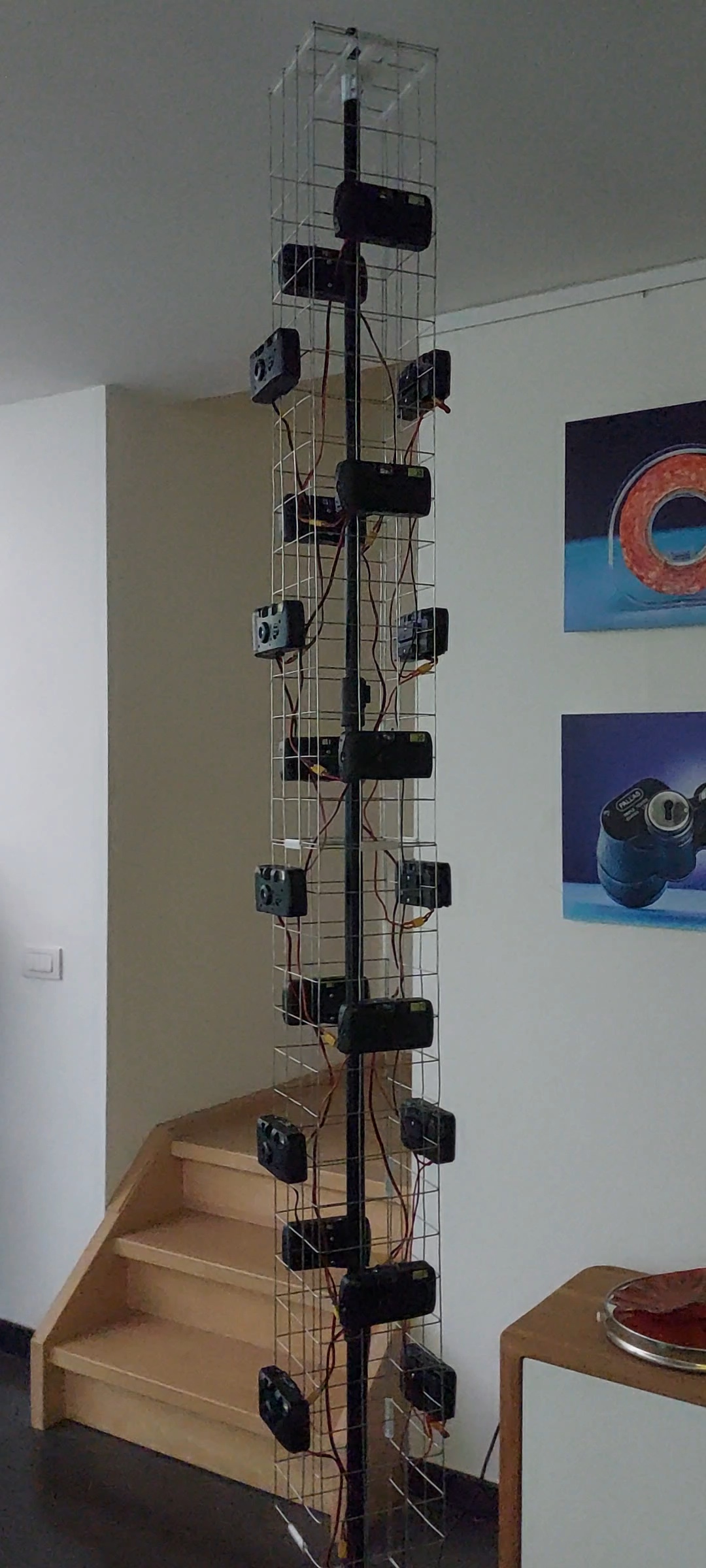
Retinal Attack is an interactive light installation made from twenty used disposable cameras that come back to life in a surprising way. When a visitor approaches and smiles, the installation responds with an orchestrated burst of camera flashes, an unexpected “attack” of light triggered simply by a cheerful expression.
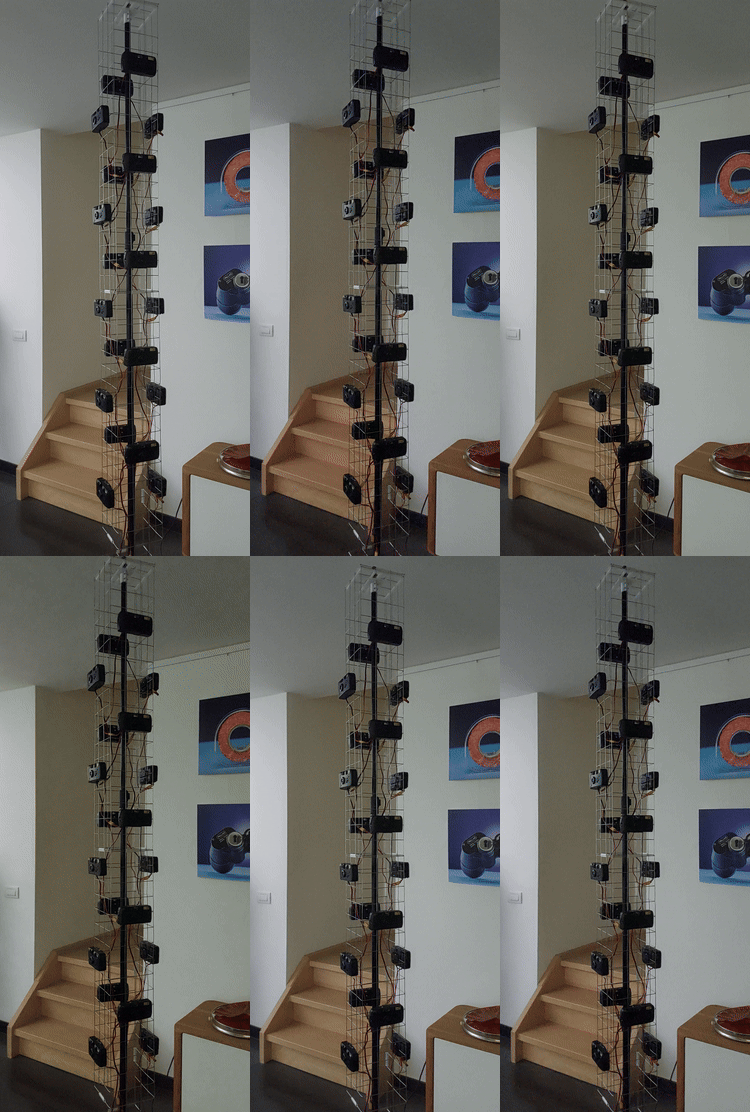
A 2.2 meter high column carries the cameras, divided in five groups. As the visitor smiles longer, more groups begin to fire. What starts as a single flash slowly builds into a full-scale cascade, turning the simple act of saying “cheese” into a choreographed performance. A small LED panel mounted on the camera watching you gives feedback on your "cheese score", making the response feel playful yet uncanny. The face analysis is displayed live in real time on a screen, revealing how machines instantly interpret our expressions.
At its core, Retinal Attack is about more than interaction.
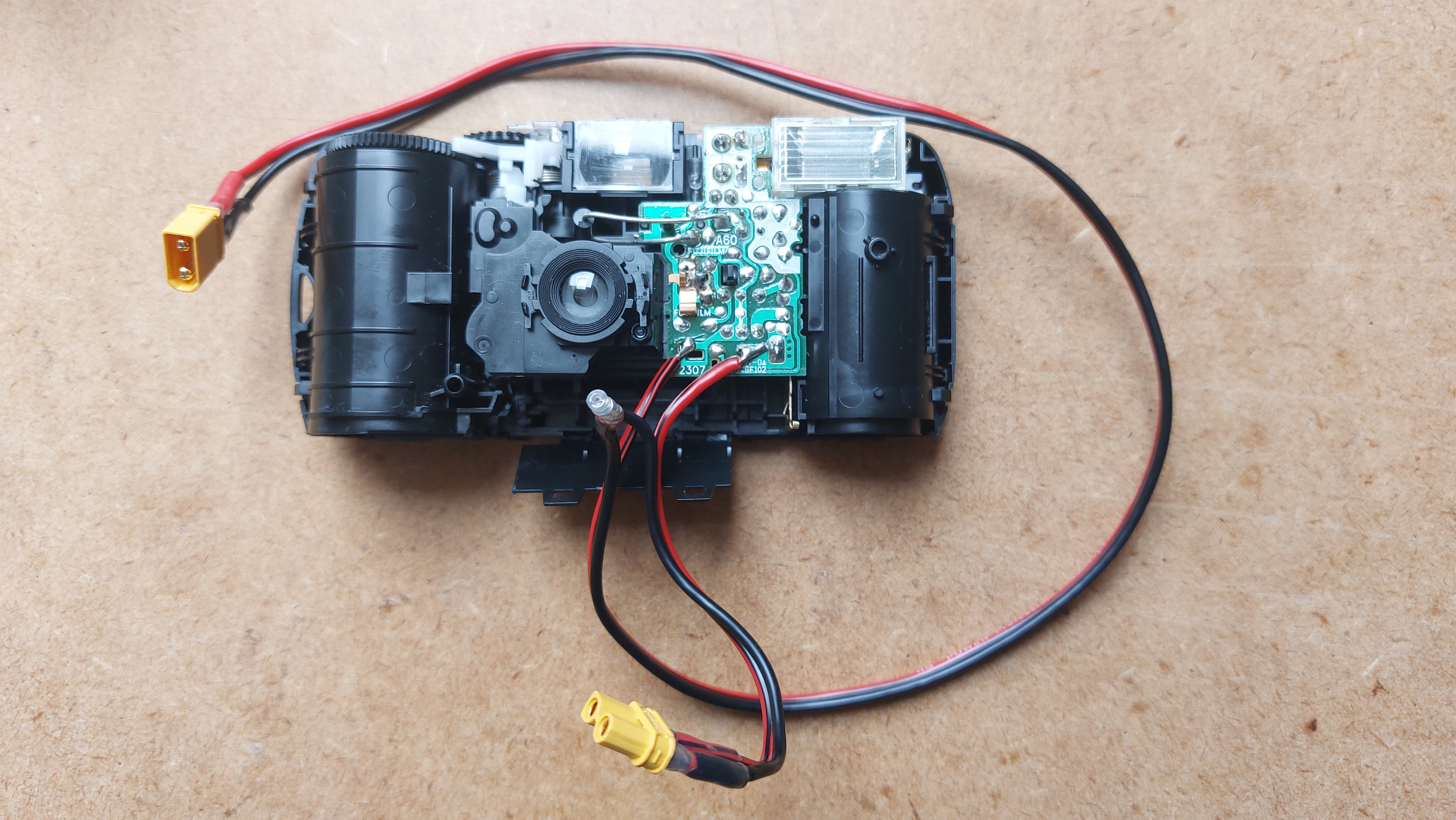
It asks what happens when objects meant to be thrown away, like cheap single-use cameras, are repurposed into something expressive and enduring. The installation turns e-waste and budget materials into a new kind of monument: one that exposes the hidden power structures embedded in the devices we use every day.
The flashes themselves echo the world we live in: a culture overloaded with selfies, where our faces are constantly captured, shared, analyzed, and turned into data. The installation exaggerates this reality, inviting the visitor to reflect on how effortlessly we perform for cameras, and how willingly we offer our expressions to devices that quietly watch us.
By transforming discarded technology into an artwork that literally lights up in response to a smile, Retinal Attack becomes both playful and critical. It celebrates creative reuse while questioning the throwaway mindset of consumer culture. And it gently reminds us that in an age of surveillance capitalism, even the simplest gesture, like a smile, can set a whole mechanism in motion beyond our control and knowledge. The installation is showing how easily our expressions can be captured, interpreted, and put to work behind the scenes.
The installation name refers to the visual overload initiated by the installation.
Mindset and Philosophy
- Reuse and up-cycle
- The installation is partly made from e-waste and cheap items that are transformed into an engaging audience experience.
- Flexible and modular
- The design is modular using mesh wire and custom designed 3D printed interconnection clips that can be combined in several ways.
- Low-cost
- The installation is build with disposed materials, 3D printed parts, low-cost hardware store materials and electronics.
- Lightweight
- The installation is light and compact to transport, minimizing transport and setup costs.
- Open source
- I share this project to enable other artists to use this concept for their own goals.
